Embarking on the journey of creating the perfect pasta dish begins with a seemingly simple, yet profoundly important step: salting your pasta water. This foundational element, often overlooked or misunderstood, is the secret ingredient that elevates humble pasta from ordinary to extraordinary, infusing every strand with a depth of flavor that complements any sauce.
Understanding the fundamental role of salt, how to measure the correct amount, and the optimal timing for its addition are crucial for achieving that sought-after al dente texture and ensuring your pasta is seasoned from the inside out. We will delve into the science behind why this practice is so vital, explore common pitfalls to avoid, and uncover advanced techniques to tailor your salting to different pasta types and sauces, ultimately transforming your pasta-making from a chore into an art form.
The Fundamental Role of Salt in Pasta Water
Salting pasta water is not merely a suggestion; it is a cornerstone of authentic Italian pasta preparation. This simple yet crucial step profoundly influences the final dish, transforming bland pasta into a flavorful experience. Understanding why and how to salt your pasta water unlocks a deeper appreciation for this culinary technique.The primary purpose of salting pasta water is to season the pasta from the inside out.
As the pasta cooks and absorbs water, it also absorbs the salt, ensuring that every strand is imbued with a pleasant, savory taste. Without adequate salt, pasta can taste disappointingly bland, requiring excessive seasoning of the sauce to compensate, which can lead to an unbalanced flavor profile.
Salt’s Impact on Pasta Flavor
Salt is a flavor enhancer that amplifies the natural sweetness and inherent taste of the durum wheat used in pasta. It doesn’t just make the pasta taste “salty”; rather, it brightens and rounds out its flavor. Think of it like adding salt to caramel or chocolate – it brings out the complexity and depth of the other ingredients. When pasta is properly salted, it requires less sauce and the sauce itself can be more nuanced, as the pasta provides a well-seasoned base.
The Science of Salt and Water
The addition of salt to water raises its boiling point. This phenomenon is known as boiling point elevation, a colligative property that depends on the concentration of solute particles in a solvent. While the increase in boiling point from the amount of salt typically used for pasta water is relatively small – often just a degree or two Celsius – it does have a subtle effect.
This slightly higher temperature can lead to marginally faster cooking times and a firmer texture for the pasta.
The scientific principle at play is boiling point elevation, where the addition of a solute like sodium chloride (NaCl) to a solvent like water disrupts the solvent’s ability to transition into a gaseous state, thus requiring more energy (a higher temperature) to reach boiling.
Historical Significance in Italian Cuisine
The tradition of salting pasta water is deeply ingrained in Italian culinary heritage. It is believed to have originated from the need to season the pasta adequately, as early pasta dishes often relied on simple sauces or even just olive oil. Italians often describe properly salted pasta water as tasting like “the sea.” This adage highlights the importance of achieving a saline concentration that effectively seasons the pasta without making it unpleasantly salty.
This practice has been passed down through generations, becoming an essential element of creating authentic Italian pasta dishes.
Determining the Right Amount of Salt
Achieving the perfect saltiness in your pasta water is a nuanced process that directly impacts the final flavor of your dish. It’s not simply about adding salt, but about understanding the ratios and the properties of different salt types to ensure your pasta is seasoned from the inside out. This section will guide you through the precise measurements and considerations for salting your pasta water effectively.
Guidelines for the Ideal Salt-to-Water Ratio
The universally recommended guideline for salting pasta water is to aim for a salinity that is reminiscent of seawater. This is often translated into a specific ratio of salt to water to achieve that optimal flavor.
For every liter (approximately 4 cups) of water, use about 10 grams (roughly 1.5 to 2 teaspoons) of salt.
This ratio ensures that the pasta absorbs enough salt during cooking to be flavorful on its own, without being overwhelmingly salty. Adjustments can be made based on personal preference and the type of salt used, but this serves as an excellent starting point for most recipes.
Salt Types and Their Impact on Salinity
Different types of salt have varying crystal sizes and densities, which affects how much salt you measure by volume and how intensely it tastes. Understanding these differences is crucial for accurate seasoning.
- Kosher Salt: Kosher salt has larger, irregular flakes and is less dense than table salt. This means you’ll need more of it by volume (teaspoons) to achieve the same level of saltiness as finer-grained salts. Its purity and lack of additives also contribute to a cleaner taste.
- Sea Salt: Similar to kosher salt, sea salt can vary in grain size, but many common varieties are also flaky or granular. It generally offers a pure, briny flavor without the metallic aftertaste that can sometimes be present in iodized table salt. Adjustments should be made based on the specific grain size.
- Table Salt: Table salt is the most finely granulated salt and is often iodized. Due to its density, a smaller volume of table salt is needed to achieve the same saltiness as kosher or sea salt. The iodine can impart a subtle flavor that some people notice, though it is generally not a significant issue for pasta.
Comparison of Saltiness for Common Salt Types (Standard Pot of Water)
To illustrate the differences in saltiness based on salt type, consider a standard pot of pasta water, roughly 4 liters (about 16 cups). The following table provides approximate measurements to achieve a similar level of salinity.
| Salt Type | Approximate Measurement for 4 Liters of Water | Notes |
|---|---|---|
| Kosher Salt (e.g., Diamond Crystal) | 6-8 teaspoons (about 30-40 grams) | Flaky, less dense. Easy to dissolve. |
| Sea Salt (Fine to Medium Grain) | 5-7 teaspoons (about 25-35 grams) | Varies by grain size; adjust based on coarseness. |
| Table Salt (Iodized) | 3-4 teaspoons (about 15-20 grams) | Finely granulated, dense. Use less by volume. |
It is important to note that these are estimates. Weighing salt is the most accurate method for consistency, but for home cooks, using volume measurements with an understanding of the salt type is generally sufficient.
Common Mistakes in Salting Pasta Water and How to Avoid Them
Many home cooks make common errors when salting their pasta water, which can lead to bland or overly salty pasta. Recognizing these pitfalls is the first step to avoiding them.
- Adding Salt Too Early: While not a critical error for flavor, adding salt to cold water before it boils can slightly increase the time it takes for the water to reach a rolling boil. To optimize cooking time, it is best to add salt once the water is already boiling.
- Under-Salting: This is the most frequent mistake. Insufficient salt means the pasta will absorb less flavor, resulting in a dish that tastes flat. Always err on the side of slightly more salt than you think you need, especially if using kosher or sea salt, which are less dense.
- Over-Salting: Conversely, adding too much salt can make the pasta unpleasantly salty. This is particularly easy to do with fine-grained table salt. If you accidentally over-salt, you can try adding a bit more unsalted water to dilute it, though this is not always effective.
- Not Tasting the Water: The best way to gauge the correct salt level is to taste the water before adding the pasta. It should taste pleasantly salty, like a mild broth or lightly seasoned soup. This simple step is often overlooked but is the most reliable indicator.
- Using the Wrong Salt Measurement: As discussed, different salts have different densities. Using the same volume measurement for table salt as for kosher salt will result in a significantly different level of salinity. Always be mindful of the type of salt you are using.
When to Add Salt to Pasta Water
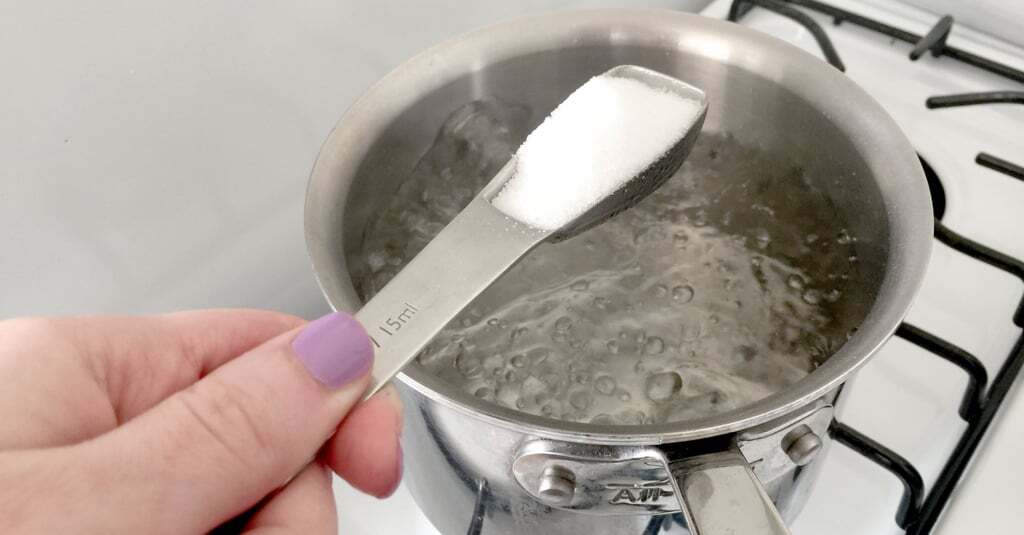
The timing of when you add salt to your pasta water is a small detail that can make a significant difference in the final flavor of your dish. While it might seem like a minor point, understanding the optimal moment ensures that the salt effectively seasons the pasta as it cooks. This section will guide you through the best practices for salting your pasta water, explaining the reasoning behind the timing and providing a clear, actionable procedure.Adding salt too early or too late can impact both the taste and the cooking process of your pasta.
Understanding the nuances of each scenario helps in achieving perfectly seasoned pasta every time. We will explore the consequences of incorrect timing and provide a straightforward method to ensure your pasta water is salted correctly.
Optimal Timing for Salting Pasta Water
The consensus among culinary experts and chefs is to add salt to the pasta waterafter* it has reached a rolling boil. This timing allows the salt to dissolve quickly and evenly into the water, maximizing its ability to penetrate and season the pasta from the inside out as it absorbs the water during cooking. Adding salt to cold water, while not detrimental to the pasta itself, can slightly delay the boiling process as the salt needs to dissolve first.
More importantly, if salt is added to cold water and left to sit for an extended period, especially in certain types of pots (like aluminum), it could potentially lead to pitting or corrosion over time due to the concentrated brine. Therefore, waiting for the boil is the most efficient and recommended approach for both flavor and equipment longevity.
Consequences of Incorrect Salting Timing
Adding salt too early, before the water boils, can lead to a slightly prolonged boiling time. While this effect is minimal, it’s less efficient. A more significant concern with early salting, particularly if the water is left to sit with undissolved salt, is the potential for corrosion or pitting of the pot, especially if the pot is made of aluminum.
Conversely, adding salt too late, after the pasta has already been cooking for a while, means the pasta has missed a crucial window for absorbing flavor. The salt will primarily season the surface of the pasta, resulting in a less uniformly seasoned dish. The ideal scenario is for the pasta to absorb the salty water as it cooks, ensuring every strand is flavorful.
Effective Procedure for Salting Pasta Water
Achieving perfectly salted pasta water is a simple, multi-step process that ensures optimal flavor. Follow these steps for consistent results:
- Fill your pot with the desired amount of water.
- Place the pot on the stove over high heat and bring the water to a vigorous, rolling boil.
- Once the water is boiling rapidly, carefully add the salt. A common guideline is about 1 to 2 tablespoons of kosher salt per gallon of water, but this can be adjusted based on personal preference and the type of salt used.
- Stir the water briefly to ensure the salt dissolves completely.
- Proceed with adding your pasta to the boiling, salted water.
Tasting and Adjusting Saltiness
Before adding your pasta, it is crucial to taste the water to ensure it is seasoned correctly. The water should taste noticeably salty, akin to the sea. This is the best indicator that the water has enough salt to properly season the pasta.
The water should taste like a mild sea breeze.
If the water does not taste sufficiently salty, carefully add a little more salt and stir until dissolved. It is easier to add more salt than to remove it. Remember that the pasta will absorb this salty water, so the water itself needs to be well-seasoned. After tasting and adjusting, proceed to add your pasta to the perfectly salted boiling water.
The Impact of Salting on Pasta Texture and Cooking
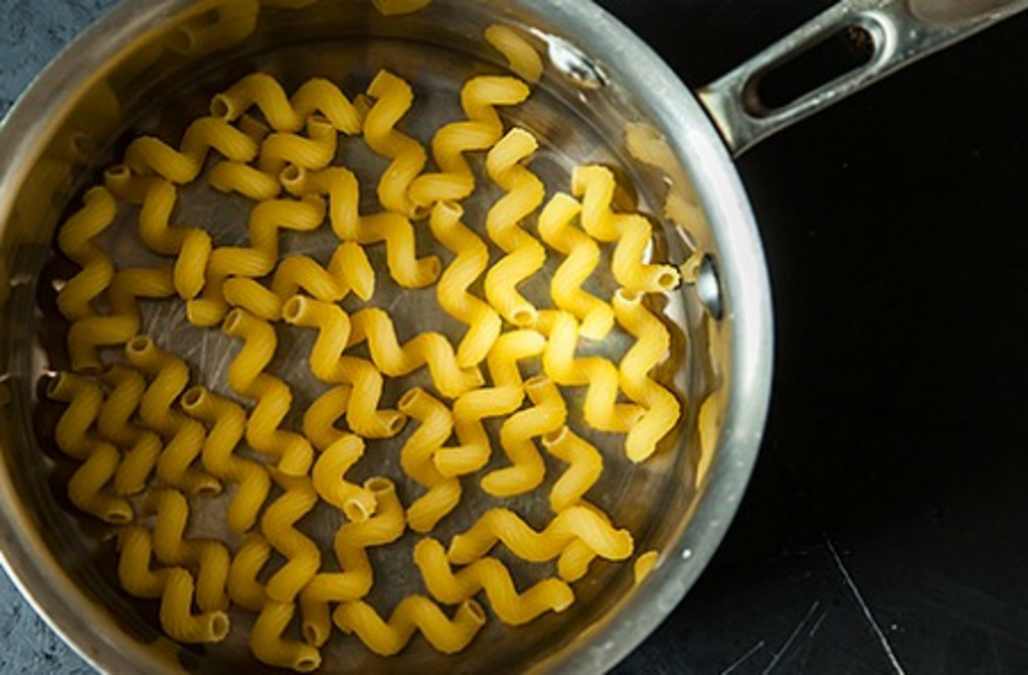
Properly salting your pasta water is not merely a matter of taste; it profoundly influences the final texture and cooking process of your pasta. The salt plays a crucial role in how the pasta absorbs water and develops its characteristic “al dente” bite. Understanding this impact can elevate your pasta dishes from good to exceptional.The presence of salt in the cooking water is a key determinant of the pasta’s texture.
It affects the gelatinization of starch and the protein structure within the pasta, leading to a more desirable outcome. This process is fundamental to achieving that perfect balance of firmness and tenderness.
Contribution to Al Dente Texture
Salted water contributes significantly to achieving the coveted “al dente” texture by influencing the pasta’s internal structure as it cooks. The salt ions interact with the starch molecules, promoting a more even and controlled gelatinization. This means the starches swell and soften without becoming mushy, allowing the pasta to retain a slight resistance to the bite. Furthermore, salt can help to firm up the gluten network in the pasta, providing structural integrity and preventing it from breaking down too easily during cooking.
Effect of Unsalted or Undersalted Water
When pasta is cooked in unsalted or undersalted water, the results are often disappointing. Without sufficient salt, the pasta tends to absorb water more rapidly and unevenly, leading to a softer, more flabby consistency. The starches may over-gelatinize, resulting in a gummy or sticky texture. The pasta also lacks the internal seasoning that salt provides, making the dish taste bland and incomplete, even after adding sauce.
Comparison of Cooking Results with Varying Salt Concentrations
The difference in cooking results between pasta cooked in water with varying salt concentrations is stark and easily observable. Pasta in properly salted water maintains its shape, has a pleasant chew, and absorbs sauces beautifully. In contrast, pasta cooked in undersalted water often becomes limp, loses its structural integrity, and can appear dull. Overly salted water, while less common as a mistake, can lead to a tough exterior and a slightly chalky texture as the salt draws out too much moisture prematurely.Here are some visual cues to observe in pasta as it cooks in well-salted water:
- The pasta will maintain a vibrant, consistent color throughout the cooking process, without becoming overly translucent or dull.
- As it cooks, the pasta strands or shapes will appear to plump up evenly, suggesting uniform water absorption.
- You will notice a slight sheen on the surface of the pasta, indicating that the starches are gelatinizing properly without sticking together excessively.
- When a piece is removed and cooled slightly, it will hold its shape without collapsing or becoming distorted.
- The pasta will exhibit a distinct firmness when bitten into, offering a satisfying resistance before yielding to a tender interior.
Beyond the Basics: Advanced Techniques and Considerations
:max_bytes(150000):strip_icc()/bottarga-pasta-recipe-5204241-step-06-54d4a4826f594b1aa57dbbbc4dfb22fb.jpg "How to salt pasta water the right way | Borneo Bulletin Online")
While understanding the fundamental role of salt, the right amount, and timing is crucial, mastering pasta water salting involves nuanced adjustments for truly exceptional results. These advanced techniques consider the specific characteristics of different pasta types and the interplay with your chosen sauce, elevating your pasta dishes from good to extraordinary.Seasoning the pasta itself through the water is a core principle of Italian cooking, ensuring that each strand of pasta is flavorful from the inside out, rather than relying solely on the sauce for taste.
This creates a more harmonious and balanced dish where the pasta and sauce are integrated, not merely coexisting.
Pasta Type and Salt Adjustments
The type of pasta you are cooking significantly influences how much salt you should add to the water. Fresh pasta, with its higher moisture content and shorter cooking time, absorbs salt differently than its dried counterpart. Similarly, the diverse shapes of pasta can affect the rate at which they absorb both water and salt.
- Dried Pasta: Generally requires a more robust salt level in the cooking water as it has a lower initial moisture content and a longer cooking time, allowing for more gradual salt absorption.
- Fresh Pasta: Being more delicate and cooking much faster, fresh pasta benefits from slightly less salt in the water. Over-salting fresh pasta can lead to a mushy texture and an overly salty final product.
- Pasta Shapes: Thicker shapes like rigatoni or paccheri will absorb salt more slowly than thin strands like spaghetti or angel hair. Consider this when determining your salt quantity, aiming for even seasoning throughout. Small shapes like orzo or couscous will also absorb salt quickly due to their increased surface area.
Sauce Salinity Influence
The inherent saltiness of your sauce is a critical factor that should inform how much salt you add to the pasta water. Over-salting the water when preparing a sauce that is already rich in salt will result in an unpleasantly salty dish. Conversely, a very mild or unsalted sauce may require slightly more salt in the pasta water to provide a baseline flavor.
The goal is to season the pasta water to taste like the sea, but remember that the sauce will also contribute salt. Adjust accordingly.
Recommended Salt Amounts for Water Volumes
To provide a practical guide, here is a chart outlining recommended salt amounts for different volumes of water. These are starting points, and personal preference, as well as the factors discussed above, should always be considered.
| Volume of Water | Recommended Salt (Coarse Sea Salt or Kosher Salt) |
|---|---|
| 1 liter (approx. 4 cups) | 10-15 grams (approx. 1.5-2 teaspoons) |
| 2 liters (approx. 8 cups) | 20-30 grams (approx. 3-4 teaspoons) |
| 3 liters (approx. 12 cups) | 30-45 grams (approx. 4.5-6 teaspoons) |
| 4 liters (approx. 16 cups) | 40-60 grams (approx. 6-8 teaspoons) |
This chart uses coarse sea salt or kosher salt, which are less dense than fine table salt. If using fine table salt, you would need approximately half the amount by volume.
Seasoning the Pasta Itself
The concept of “seasoning the pasta itself” through the water is a cornerstone of achieving a truly delicious pasta dish. When salt is dissolved in the boiling water, it permeates the pasta as it hydrates and cooks. This process ensures that the pasta is not just a vehicle for sauce but a flavorful component of the meal in its own right.When the pasta absorbs the salty water, the salt is distributed evenly throughout its structure.
This internal seasoning creates a depth of flavor that cannot be replicated by simply salting the sauce. It allows the natural taste of the pasta to shine through, creating a more balanced and enjoyable eating experience. This technique is particularly important for simple pasta dishes where the pasta’s quality and flavor are paramount.
Illustrative Scenarios and Visualizations
To truly appreciate the impact of salt on pasta, let’s explore some practical scenarios and visualize the differences that proper salting makes. Understanding these outcomes can solidify your commitment to this fundamental step in pasta cooking.Understanding the consequences of under-salting and over-salting pasta water helps reinforce the importance of achieving the right balance. These scenarios serve as cautionary tales and benchmarks for your own cooking.
Pasta Cooked in Water with Insufficient Salt
Imagine cooking a batch of spaghetti in water that has barely a pinch of salt. The pasta, as it absorbs the water, will also absorb its meager flavor. The resulting dish will likely taste bland and one-dimensional, requiring heavy seasoning from sauces or toppings to compensate. The texture might also be subtly affected, appearing somewhat dull and less vibrant. This experience highlights how the pasta itself becomes a flavor carrier, and without adequate salt in the water, it’s an empty vessel.
Pasta Cooked in Water with Excessive Salt
Conversely, consider pasta cooked in water that is overly salted, perhaps to the point of tasting like the sea. The pasta will absorb a significant amount of this salt, leading to an unpleasantly sharp, briny flavor that can overpower any accompanying sauce. The texture might also suffer, potentially becoming slightly tougher or more prone to breaking. In extreme cases, the excess salt can even inhibit the starch from fully gelatinizing, affecting the pasta’s chewiness.
Visualizing the Difference in Salted Pasta Water
To illustrate the effect of salt on pasta, imagine a visual comparison. We can describe the characteristics of pasta cooked in three different conditions: no salt, the correct amount of salt, and too much salt.
- Pasta Cooked in Unsalted Water: This pasta would appear slightly pale, with a dull surface. When bitten into, it would offer a soft, yielding texture, but with a distinct lack of inherent flavor. It would feel like a blank canvas, desperately awaiting sauce.
- Pasta Cooked in Correctly Salted Water: This pasta would have a more vibrant, almost luminous appearance. Its surface would be smooth and slightly glossy. The texture would be perfectly al dente – firm to the bite with a satisfying chew. Each strand would possess a subtle, pleasant savoriness that complements, rather than competes with, the sauce.
- Pasta Cooked in Overly Salted Water: This pasta might exhibit a slightly darker hue, and its surface could appear less inviting, perhaps even a bit leathery. The texture might feel dense or overly chewy, and upon tasting, a pronounced, lingering saltiness would be immediately apparent, making the pasta itself taste predominantly of salt.
The Dissolution and Distribution of Salt Crystals in Boiling Water
The seemingly simple act of adding salt to boiling water is a dynamic chemical process. When salt crystals (primarily sodium chloride, NaCl) are introduced to hot water, they begin to break down into their constituent ions: positively charged sodium ions (Na+) and negatively charged chloride ions (Cl-).The heat of the boiling water significantly speeds up this process, causing the ionic bonds within the salt crystal to weaken and break apart.
These ions then become surrounded by water molecules, a process called hydration. The water molecules, being polar, arrange themselves around the charged ions, effectively pulling them away from the crystal lattice.
NaCl (solid) + H₂O (liquid) → Na⁺ (aqueous) + Cl⁻ (aqueous)
Once dissolved, these charged ions are no longer localized within the original salt crystal. Instead, they disperse throughout the entire volume of water due to the natural tendency of particles to spread out from an area of high concentration to an area of low concentration, a process known as diffusion. The vigorous movement of water molecules in boiling, combined with the random motion of the dissolved ions, ensures that the salt is distributed relatively evenly throughout the pot.
This even distribution is crucial, as it allows every piece of pasta submerged in the water to absorb salt consistently, leading to uniformly seasoned pasta.
Closure
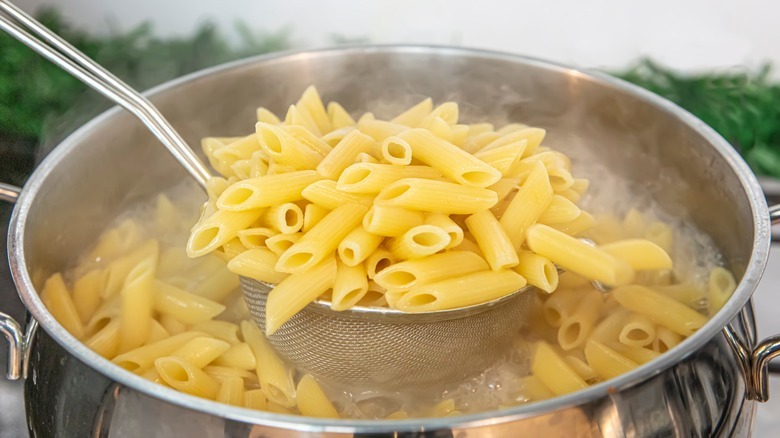
Mastering the art of salting pasta water is a game-changer for any home cook, unlocking a new level of flavor and texture in every bite. By embracing the principles of correct salting, from understanding its historical significance to adjusting for different pasta varieties and sauces, you are well-equipped to create consistently delicious pasta dishes that will impress your guests and delight your palate.
Remember, it’s not just about seasoning the water; it’s about seasoning the pasta itself, ensuring each strand is a flavorful foundation for your culinary creations.